Fifty-two islands in a national park, most of them reachable only by boat. We sail from November to April when the northeast trades are steady and the bays are empty.
November - April
524
29*C
Cliffs, culture, and cuisine – this trip leaves nothing to be desired. Navigating the historic waters between Elba (Napoleon's legendary island of exile) and Corsica (his untamed birthplace), we spend our time exploring small, picturesque harbors, unspoiled nature, and unique, secluded swimming spots. Yet, beyond discovering these hidden gems, we also embrace the thrill of the open water, putting in the miles and enjoying plenty of authentic sailing action along the way.
The Koh Chang archipelago sits on the Gulf of Thailand's eastern coast. Its weather follows the northeast monsoon, which runs opposite to the Andaman Sea (Phuket) — so Thailand effectively has two complementary sailing seasons on two different coasts. The data below is specific to Koh Chang, not Thailand in general.
This is the link to the Thai Meteorological Department for live weather and forecasts.
The northeast monsoon brings winds of 5–15 knots from the northeast. Conditions are stable, skies clear and seas calm. January and February are often the lightest months — some days you motor more than you sail, which is worth knowing if sailing performance matters to you. The upside: these are the quietest months on the water, with the coolest air temperatures of the season (around 29–30°C).
The best wind of the season often comes in March when northeast trades are still present but the air pressure gradient increases with the approaching heat. April is the hottest month (33°C average) and wind becomes more variable — good sailing days still occur but afternoon calms are common. Rain risk starts building toward the end of April. We run our last departures in early April.
The Gulf of Thailand has a tidal range of approximately 2 metres — considerably more than the near-zero range of the Mediterranean, and something every Mediterranean-experienced sailor underestimates on their first trip to Thailand. Anchorage choices and timing matter. We brief every departure on local tide tables, and the skipper factors tide into every anchoring decision.
We run sailing & catamaran trips in Thailand for group and solo travellers who want to enjoy and see Thailand from a new perspective. Perfect if you want to see the places most tourists won´ t ever see. Beaches without road access, reefs and local villages that you wont find in any blog article
Show Me More!Thailand has two distinct sailing coasts. Most guides treat them as one. They are not — the seasons are opposite, the anchorages are different in character, and the crowds are very different. Here is an honest map of all five main regions, with ours on top.
Lorem ipsum dolor sit amet, consectetur adipiscing elit. Suspendisse varius enim in eros elementum tristique. Duis cursus, mi quis viverra ornare, eros dolor interdum nulla, ut commodo diam libero vitae erat. Aenean faucibus nibh et justo cursus id rutrum lorem imperdiet. Nunc ut sem vitae risus tristique posuere.
November - April
Koh Chang, Trat Province
Low. Few charter fleets here
Thailand's main charter hub — the largest international fleet, the best-maintained marinas, and the most famous scenery. Phang Nga Bay's limestone karsts, the Similan Islands' dive sites, and easy provisioning from Phuket Town make this the default choice for most yacht charterers. The trade-off: high season is busy, marina costs are higher than on the Gulf coast.
November - April
Koh Chang, Trat Province
High - Most Popular
Lorem ipsum dolor sit amet, consectetur adipiscing elit. Suspendisse varius enim in eros elementum tristique. Duis cursus, mi quis viverra ornare, eros dolor interdum nulla, ut commodo diam libero vitae erat. Aenean faucibus nibh et justo cursus id rutrum lorem imperdiet. Nunc ut sem vitae risus tristique posuere.
November - April
Koh Chang, Trat Province
Low. Few charter fleets here
Lorem ipsum dolor sit amet, consectetur adipiscing elit. Suspendisse varius enim in eros elementum tristique. Duis cursus, mi quis viverra ornare, eros dolor interdum nulla, ut commodo diam libero vitae erat. Aenean faucibus nibh et justo cursus id rutrum lorem imperdiet. Nunc ut sem vitae risus tristique posuere.
May – September
Koh Chang, Trat Province
Low. Few charter fleets here

![[background image] inviting frontoffice space (for a preschools & daycare)](https://cdn.prod.website-files.com/689457af09f8375581433b6d/6a79b57d67db2b36aaea7cc7_25b0b7c3-faa2-4929-bbe9-88fdf3aabf37.avif)


![[background image] image of temple at sunrise](https://cdn.prod.website-files.com/689457af09f8375581433b6d/6a79b57d67db2b36aaea7cdb_9ced4c9b-a8a9-4aa1-8bbb-766f9ea97c85.avif)

Sea temperature in the Gulf of Thailand stays between 28 and 30°C from November to April. You can swim as soon as you arrive and the water doesn't cool as the season progresses. For context, the Mediterranean in May — when we start sailing Greece — is around 18°C. These are genuinely warm waters, and snorkelling in them without a wetsuit is comfortable.
A tidal range of approximately 2 metres affects when and where you anchor. Reefs that are clear at high water can be shallow at low. Our skippers brief every departure on the local tide tables and factor them into the day's plan. If you have only ever sailed the Mediterranean, where tidal range is near-zero, Thailand will teach you something new about timing your anchorage.
The northeast trades are present but often run at 5–10 knots in January and February — on the light end for sailing. Some days you motor to the next bay. If you want to actually sail rather than motor between anchorages, March offers better pressure. Neither is bad — it just affects whether you spend more time under canvas or under engine.
The Koh Chang archipelago national park charges a fee of approximately 300 THB (€8) per person per night in designated park anchorages — comparable to a Mediterranean marina. We include this in the trip cost so you will not be asked to pay at anchor. Some bays within the park require a permit booked in advance; the skipper handles this before departure.
Koh Kood sits at the far south of the archipelago, close to the Cambodian border. It is one of Thailand's least developed large islands — the villages on the north and south have no connecting road, which is why arriving by boat matters. We include it in longer itineraries specifically because the only way to reach the quietest beaches on the west coast is by dinghy from an anchored catamaran.
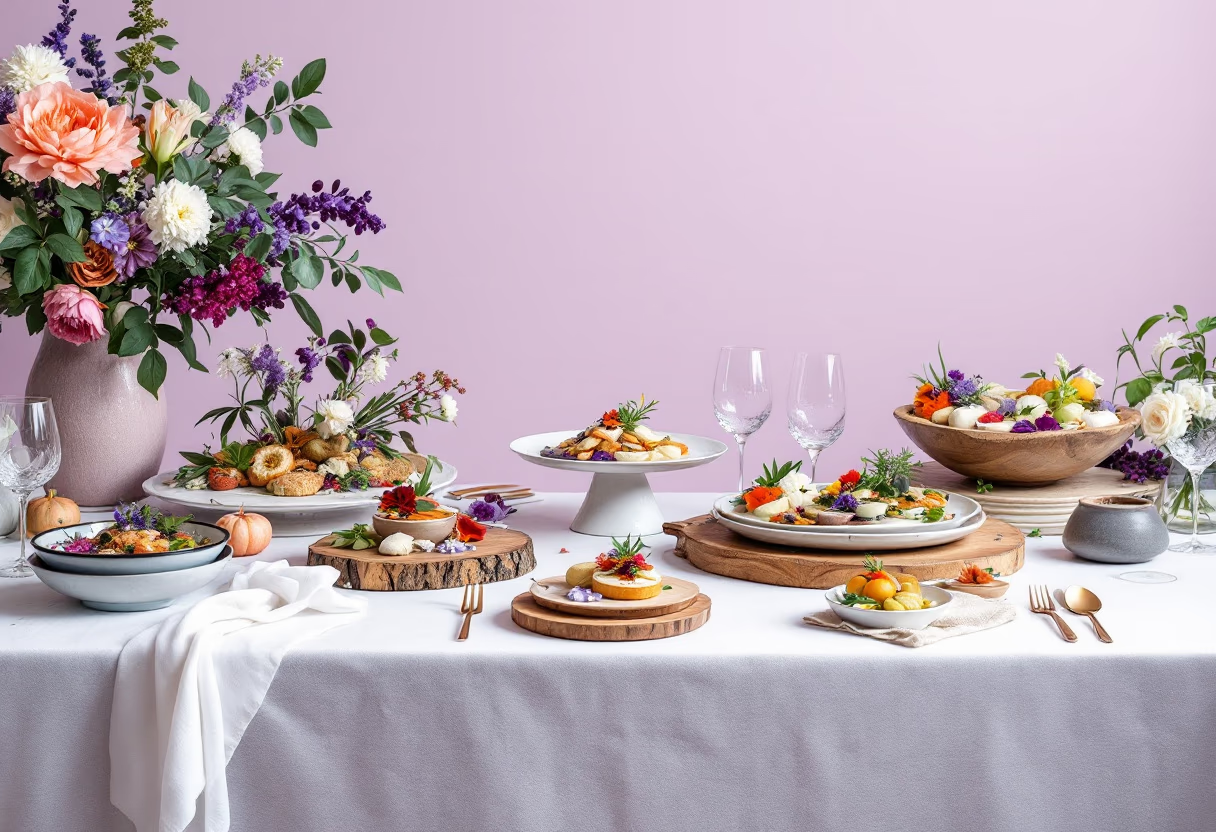
Our chef provisions from the local markets on Koh Chang and at stops along the route — fish from the morning boats, tropical fruit, coconut, locally grown herbs. There is no large supermarket mid-archipelago, so the menu is shaped by what is available on the day. Dietary restrictions are collected before the trip through the guest app — the chef works around them, but it helps to know the context: this is island provisioning, not a catered hotel.
The short version: pack light, pack soft, pack for the water. A catamaran has no storage for hard luggage cases — they end up in the saloon where they become a shared problem. Everything below is the essential list; a full packing guide with brand recommendations, pharmacy items, and what to buy in Thailand rather than bring is on the blog.
No hard cases, no wheels. A 40–50 litre duffel or backpack. Everything must fit under your bunk.
Bring it even if you don't expect to need it. Day one is the day it matters.
the water reflects UV upward. You burn faster on a boat than on a beach.
for mangrove anchorages at dusk and any shore walk through vegetation. Buy it before you arrive.
Hard luggage. Dark-soled shoes. More than one pair of jeans. Expensive jewellery. Anything you cannot afford to get salt water on. A hairdryer (12V power exists; shore power in some marinas only). Hair straighteners. More than one "going out" outfit — dinner is always in the cockpit, always in what you wore on deck.
Full Packing GuideBoth hawksbill and green sea turtles are present in the archipelago. Hawksbills are the more commonly sighted — they feed on sponges and coral and tend to remain in a relatively fixed territory around a particular reef head. Green turtles are more often seen in sandy-bottom shallows. Neither species is aggressive and both are genuinely unfazed by calm snorkellers. If you see a turtle, maintain distance and avoid touching
Spotted eagle rays are the ones you see from the deck — they sometimes leap clear of the water in the open crossings between islands, which is as dramatic as it sounds and completely unexplained by science. Blue-spotted ribbontail rays are more common, found resting on sandy patches in the shallows. They are well camouflaged and the blue-spots are the giveaway — you will swim past them if you are not looking down. They are venomous if you stand on them,
The wreck of the HTMS Chang, a decommissioned US Navy vessel deliberately sunk off Koh Chang in 2012, has become an artificial reef with resident barracuda, grouper and batfish. It sits at 30 metres, beyond recreational snorkel depth, but the shallower reef around the wreck is accessible. Clownfish in anemones are common throughout the shallows. Titan triggerfish are present and protect their nest sites aggressively from June to Octobe
Irrawaddy dolphins — the short, rounded-snout variety found in Southeast Asian coastal waters — are present in the Gulf of Thailand and occasionally seen around the outer islands. Spinner dolphins are the more acrobatic ones that sometimes bow-ride on passage. Dugong, Thailand's sea cow, inhabit the seagrass beds of the Gulf; they are not common and a sighting is genuinely unusual.
The oriental pied hornbill is the showpiece bird of Koh Chang — large, loud, and unmistakable with its casque. They are seen along the forest edge from the water. White-bellied sea eagles patrol the cliff tops and soar over the bays. Pacific reef egrets stand on the rocks at the waterline. The blue-eared kingfisher is common in the mangrove creeks and is best seen from the dinghy in the early morning when the light is in the right direction and the bird is sitting still.
Octopus are found under rocky overhangs in the shallows — they are genuinely present but genuinely hard to find, which is what makes them worth looking for. Nudibranchs (sea slugs) are on every reef if you look within centimetres of the coral surface; they are impractically beautiful and impractically small. The Koh Chang frog is not in the water — it is an island-endemic amphibian found near freshwater on the island at night,
Enjoy a full week and get yourself the spa treatment you deserve. Together you will enjoy daily yoga & stretching sessions, experience sound bathing, and get your fair share of massages. Our private chefs will treat you to all the local dishes and go shopping together with you at the variouse markets you will discover.
Button TextThe wreck of the HTMS Chang, a decommissioned US Navy vessel deliberately sunk off Koh Chang in 2012, has become an artificial reef with resident barracuda, grouper and batfish. It sits at 30 metres, beyond recreational snorkel depth, but the shallower. This retreat is recommended for friends.
These are not excursions we sell. They are things worth knowing exist — some for shore days, some for the day before or after the trip. Five external links to genuinely useful sources.
The interior of Koh Chang is largely untouched national park forest — several waterfalls, including Klong Plu (a 25-metre drop, 30 minutes from the east coast), wild boar, monitor lizards, gibbons, and the birdlife you can hear from the boat at anchor. The trail system is modest and the waterfalls are real rather than tourist infrastructure. The Thai national park authority (DNP) maintains the trails and charges a small entrance fee. A shore day here is a different hour than another snorkel.
Atlas Obscura documents the genuinely unusual — things that exist and are worth seeing but don't appear in mainstream guidebooks. Trat province, which covers Koh Chang and the surrounding archipelago, has a handful of entries: a Thai-Cambodian border town with a surprisingly active market, a small war memorial related to the 1941 Battle of Koh Chang (one of the few naval engagements of the Second World War to take place in these waters), and a handful of temple sites that don't appear on standard tour itineraries. Worth checking the map before your trip.
The fundamentals of traditional Thai massage and herbal medicine are carved into the courtyard walls of Wat Pho in Bangkok — placed there by King Rama III in the nineteenth century so the knowledge would survive political upheaval. The wat is also the home of Thailand's first public university, the first to teach traditional medicine formally, and has been a UNESCO-recognised centre of traditional healing since 2019. If you are arriving or departing through Bangkok and have a day, this is worth an hour beyond the reclining Buddha photograph.
Booking your first retreat on a boat can sound like a lot of work. But we can guarantee you, it is not. If you are interested but would like to have your questions answered by a real person first, let us know and we will go through everything together and point you to the right retreat.
Not Found Your Answer? Contact Us.We are currently planning our 2027 departure calendar. Registering your interest requires no payment and no commitment.